
Phase one: planning and fixture choices
Pick your fixtures before the plumber roughs in. A freestanding tub, a wall-hung toilet and a rain shower each need a different rough-in location and different backing in the wall. Changing the fixture after the walls close can mean opening them again.
Walk the space with your plumber and contractor. Mark each fixture location, the water heater, the shutoffs and any appliance connections. Decide whether you want a pressure regulator, a recirculation line or a softener before the walls close.
Phases of a plumbing installation
Plan around these in order.
| Phase | What happens | Who is involved |
|---|---|---|
| Demolition | Old fixtures and pipes removed or capped | Contractor and plumber |
| Rough-in | Supply, drain and vent pipes placed in walls and floors | Plumber |
| Pressure test and inspection | Lines are tested and inspected before closing walls | Plumber and city inspector |
| Wall and floor finish | Drywall, tile and paint | Contractor |
| Trim-out | Fixtures and faucets installed | Plumber |
| Final test | Every fixture is run and checked | Plumber |
Rough-in: what goes in the wall
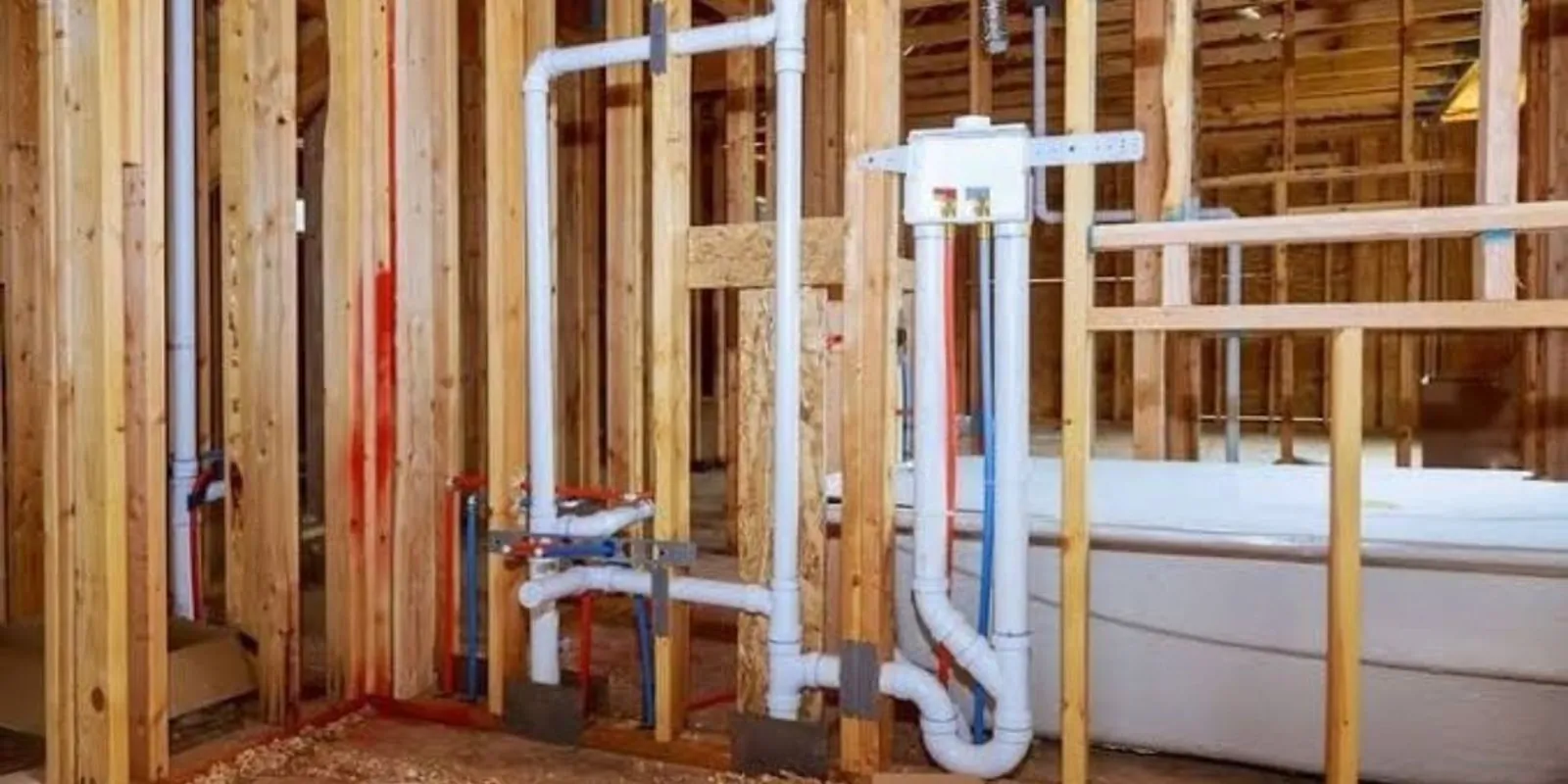
Rough-in is the pipe work you cannot see afterward. Supply lines run to each fixture, drains drop to the main, and vents let air in so drains flow. Slope matters on drains, and vent sizing matters for noise and trap protection.
This is the stage for choosing materials. PEX is fast to install and tolerates scale, and copper has a long record. We cover the choice in our blog post on installing PEX plumbing. Whichever you choose, ask for a pressure test before the walls close.
Permits and inspections
The West Hollywood Plumbing Code requires a permit for installation, alteration, repair, replacement or remodel of plumbing systems. Leak repairs and the clearing of stoppages in drain, soil, waste or vent piping are exempt, but replacing that piping needs a permit. Your plumber or contractor tells you who pulls it.
An inspection happens before walls are closed. A failed inspection is a delay, not a disaster, and it costs much less to fix open walls than closed ones. Keep the signed permit card for the property records.
Decisions to make before rough-in
Each one costs little now and a lot later.
- Fixture list and locationsFinal models, not stand-ins.
- Water heater planTank, tankless and location.
- Shutoff valvesWhere each fixture can be isolated.
- Access panelsWhere a future plumber can reach valves.
- Filtration or softenerPlan the connection now if you want one.
Pressure, old pipes and surprises behind the wall
The California Plumbing Code calls for a pressure regulator when static pressure is above 80 psi. Test before you design, because high pressure shortens the life of new fixtures. If old galvanized or cast iron appears when the wall opens, stop and review the plan. Repiping one zone while the wall is open often costs less than going back later.
Our plumbing installation page lists the jobs we take on, and we coordinate with your contractor on timing.
Keeping the schedule honest
Plumbing sits in the middle of a remodel timeline. Demolition has to happen before rough-in, and rough-in has to pass inspection before drywall. A fixture delivered late holds up trim-out, and a permit delay holds up everything behind it.
Ask your plumber for a short written sequence with the days that need a dry building, the days that need water off and the inspections that gate the next trade. Share it with the contractor, the tile setter and the manager. Most remodel delays come from trades that did not know what the plumber needed.
Questions to ask before you sign
Good answers tell you how the job will run.
- Who pulls the permit?The permit holder carries responsibility for the work passing inspection.
- What is the water shutoff plan?In an occupied building, tenants need notice and a time window.
- What happens if old pipe is found in the wall?You want the option and the price before the surprise, not after.
- What does the warranty cover?Labor and parts are often covered differently.
The final test before you sign off
After trim-out, the plumber runs every fixture, checks hot and cold at each tap, flushes each toilet, fills each tub and checks the drains for speed and noise. You should see this done, not just hear that it was done.
Take photos of the shutoff valves and label them. Keep the permit card, the final inspection record and the warranty papers together. If a fixture leaks within the warranty, those papers decide who pays.
What shapes the cost of remodel plumbing
A written scope keeps the price honest.
A freestanding tub differs from a standard one.
Moving drains costs more than moving a supply line.
Cast iron or galvanized may need replacement.
Required for most remodel work.
Compressed schedules and after-hours work cost more.
Insurance does not cover a remodel. It may cover sudden failures of new work, so keep invoices and permit records.
What older West Hollywood buildings add
West Hollywood rent stabilization covers properties with a certificate of occupancy before July 1, 1979, so many remodels happen in older buildings. Behind the walls you may find cast iron stacks, galvanized supply and drains that were never vented to current code. Each finding changes the plan, and good contractors tell you before the walls close.
The city lists the Southern California Gas Company as its gas utility and LADWP as the water utility for most addresses, with Beverly Hills Water serving some on the west side. Know which applies, because a service change or a meter question goes to the utility. If your remodel is in the hills, our Hollywood Hills page describes the pressure and access issues, and the Beverly Hills page covers that city's water.
Local questions answered
Yes. Moving drains is more involved than moving supply lines, and it usually needs a permit.
Before demolition. Early planning avoids a second opening of the wall.
The plumber fixes it and calls for a re-inspection before walls close.
Yes. A plumber checks the rough-in and installs the fixtures to code.
Sources and standards
Facts and rules on this page come from the public sources below. Check them for the current wording before you rely on a detail.
- California Plumbing Code (Title 24, Part 5), which is based on the Uniform Plumbing Code (UPC) published by IAPMO.
- California Plumbing Code section 608.2 on pressure regulators when static pressure is above 80 psi.
- West Hollywood Plumbing Code section 103.1.1, permits for plumbing installation, alteration, repair, replacement and remodel, and the exemptions for leak repair and clearing stoppages.
- City of West Hollywood rent stabilization rules, which cover properties with an original certificate of occupancy before July 1, 1979.
Got a plumbing problem in West Hollywood? Call the line.
Call (213) 672-5590