
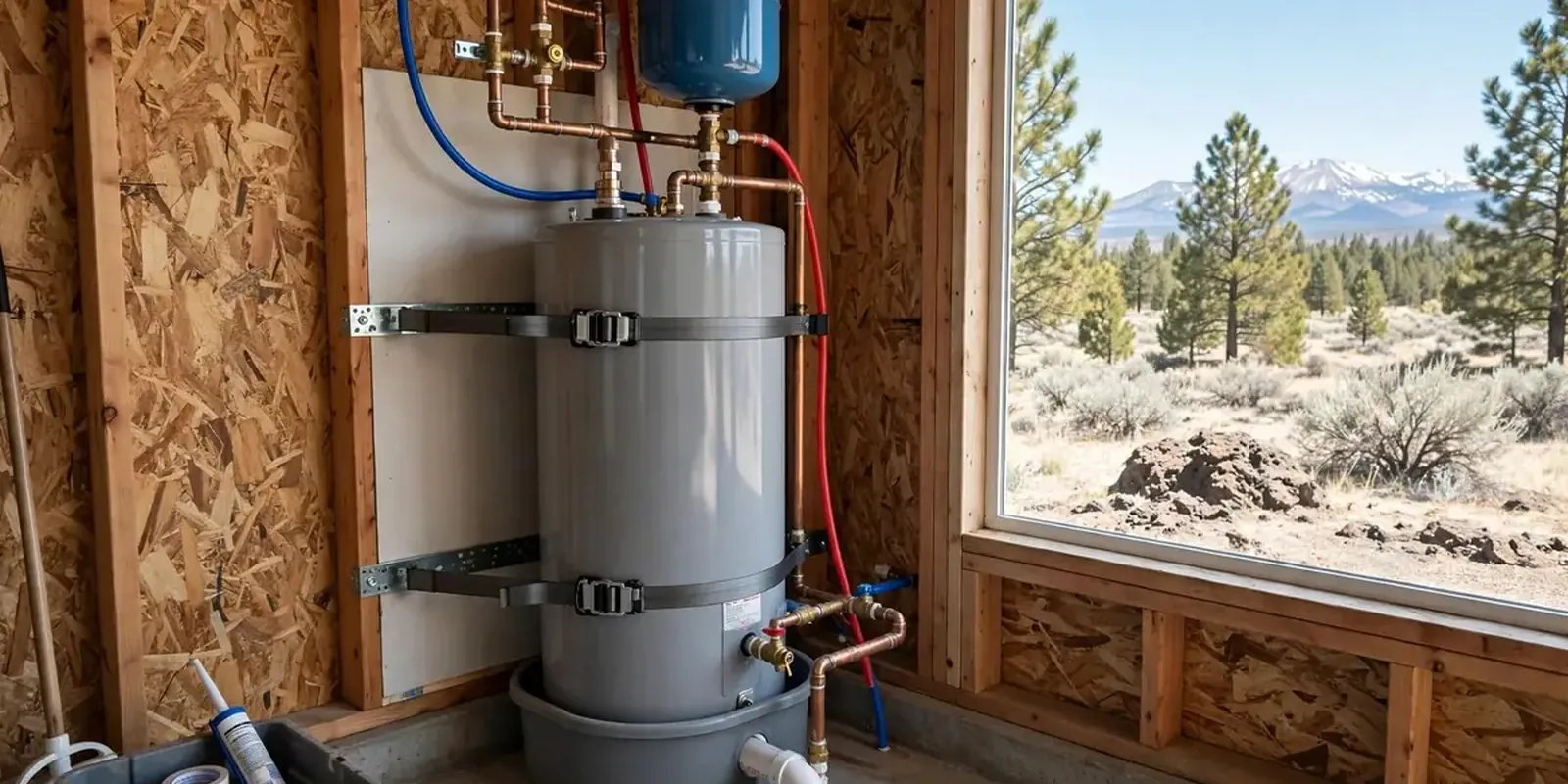
Start with where the heater will live
Location decides the rest of the job. A heater in a garage can use a standard vent and a floor drain. A heater in an interior closet needs combustion air and a vent path to the outdoors if it is gas, and a drain pan with a drain line if water damage would reach a finished floor.
In a West Hollywood condo or small apartment building, the closet is often the only option. Check the clearances on the new unit before you buy it, because a 50-gallon tank and a 40-gallon tank can have very different heights once the vent and relief line are added.
Fuel and type options compared
The right choice depends on what your building already has.
| Option | Good fit when | Watch for |
|---|---|---|
| Gas tank | A gas line and vent are already in place | Vent path, combustion air, gas connector |
| Electric tank | No gas line or no vent path is available | Panel capacity and a dedicated circuit |
| Heat pump (hybrid) | A garage or large utility room with airflow | Clearances, condensate drain, noise |
| Tankless gas | Space is tight and the gas line is large enough | Gas sizing, venting, descale schedule |
The installation sequence for a new location
A relocation or conversion takes more steps than a like-for-like swap.
- 1Plan and permitConfirm the layout, the fuel, the gas or electrical capacity and the permit path with the city before work starts.
- 2Rough-inRun new supply lines, drain and relief piping, and the gas or electrical feed to the new spot.
- 3Set, strap and connectPlace the unit, install seismic straps, connect water, gas or power, and add an expansion tank where the system is closed.
- 4Vent and testCheck draft, test for gas leaks and combustion safety, and bring the unit up to temperature.
- 5Inspection and walkthroughThe city inspects permit work. We explain the controls and the maintenance schedule.
Rules and approvals in West Hollywood
The West Hollywood Plumbing Code requires a permit for installation, alteration or replacement of regulated plumbing systems, and each building or structure needs its own permit. Because rules vary by job, confirm with the Building and Safety Division before you buy equipment.
State law also requires water heaters up to 120 gallons to be braced, anchored or strapped against earthquake movement. This applies to new and replacement installations, and it is one of the first things an inspector or a home buyer checks.
If you rent, tenants cannot normally change the heater on their own. Landlord approval is part of the plan, and in a building covered by the city rent stabilization ordinance, a capital improvement is handled by the owner.
Water quality and the equipment you choose
West Hollywood water comes mostly from the Los Angeles Department of Water and Power, with Beverly Hills Water serving certain western areas. Beverly Hills publishes a hardness of about 290 mg/L, or 17 grains per gallon, on its water page. LADWP lists hardness by source in its water quality tables, with different sources reading in different ranges.
Harder water leaves more scale on heating elements and burner surfaces. That does not change which heater you can install, but it does change how often you should flush it and whether a softener or filter is worth considering for a tankless unit.
What shapes the price of a new installation
A planned install is quoted in writing before work begins.
Moving the heater means new runs, which can outweigh the cost of the unit.
Permit work has a fee and a schedule that we plan around.
Closets and enclosed spaces often need more venting work.
Tank, tankless and heat pump models differ widely in price and labor.
Old shutoff valves and corroded pipes are replaced while the lines are open.
A planned installation is a home improvement, not an insurable loss, so insurance rarely helps. A properly permitted job protects you later if a buyer or insurer asks for records.
Choosing between a tank and a tankless unit
If you are replacing a failed unit, read about water heater replacement first. If you want on-demand hot water, compare it with a tankless water heater. Scale control matters for either, and softener and filtration is the long-term answer.
We install in Beverly Hills and across the area, and we check the permit steps with you before the work starts.
Planning a new heater or a move? Call and describe the space, and we will go through the options.
Call (213) 672-5590Water Heater Installation questions answered
Usually yes, if the new space has room, access for water lines and a path for gas vent or electrical. The cost depends mostly on the new piping and any venting that has to be created.
Often, if you have the electrical capacity and space for airflow. The panel and breaker space matter more than the unit price. We confirm both before quoting.
If your building has a closed water system, for example with a pressure regulator or backflow device on the supply, thermal expansion can raise pressure and an expansion tank protects fixtures. We check when we install.
A like-for-like swap is much shorter than a new location. A new location, with rough-in and permit steps, is planned in stages. We will give you the realistic schedule when we quote.
The manufacturer warranty comes with the unit, and labor terms are written on the quote. Keep the paperwork with your building records.
Sources and standards
Facts and rules on this page come from the public sources below. Check them for the current wording before you rely on a detail.
- California Plumbing Code (Title 24, Part 5), which is based on the Uniform Plumbing Code (UPC) published by IAPMO.
- West Hollywood Plumbing Code section 103.1.1, permits for plumbing installation, alteration, repair, replacement and remodel, and the exemptions for leak repair and clearing stoppages.
- California Health and Safety Code section 19211, bracing, anchoring or strapping of water heaters.
- City of Beverly Hills water quality information and the LADWP 2023 water quality report, which list hardness and disinfection by source.