
Hidden leak signs that are urgent
Watch for a meter that moves while every fixture is off, warm spots on a floor, peeling paint, bubbling plaster, a hissing sound in a wall and new stains on a ceiling below your unit. Each one points to water escaping the system somewhere you cannot see.
In a multi-story West Hollywood building, a leak in one unit often shows up in a neighbor's ceiling first. Tell your property manager early, because the source may be a shared riser rather than your own supply line.
How we find the leak
The method moves from least to most invasive.
- 1Meter testWe close every fixture and watch the meter. If the dial moves, water is escaping somewhere on the supply side.
- 2IsolateWe shut valves in stages to learn which branch or floor holds the leak.
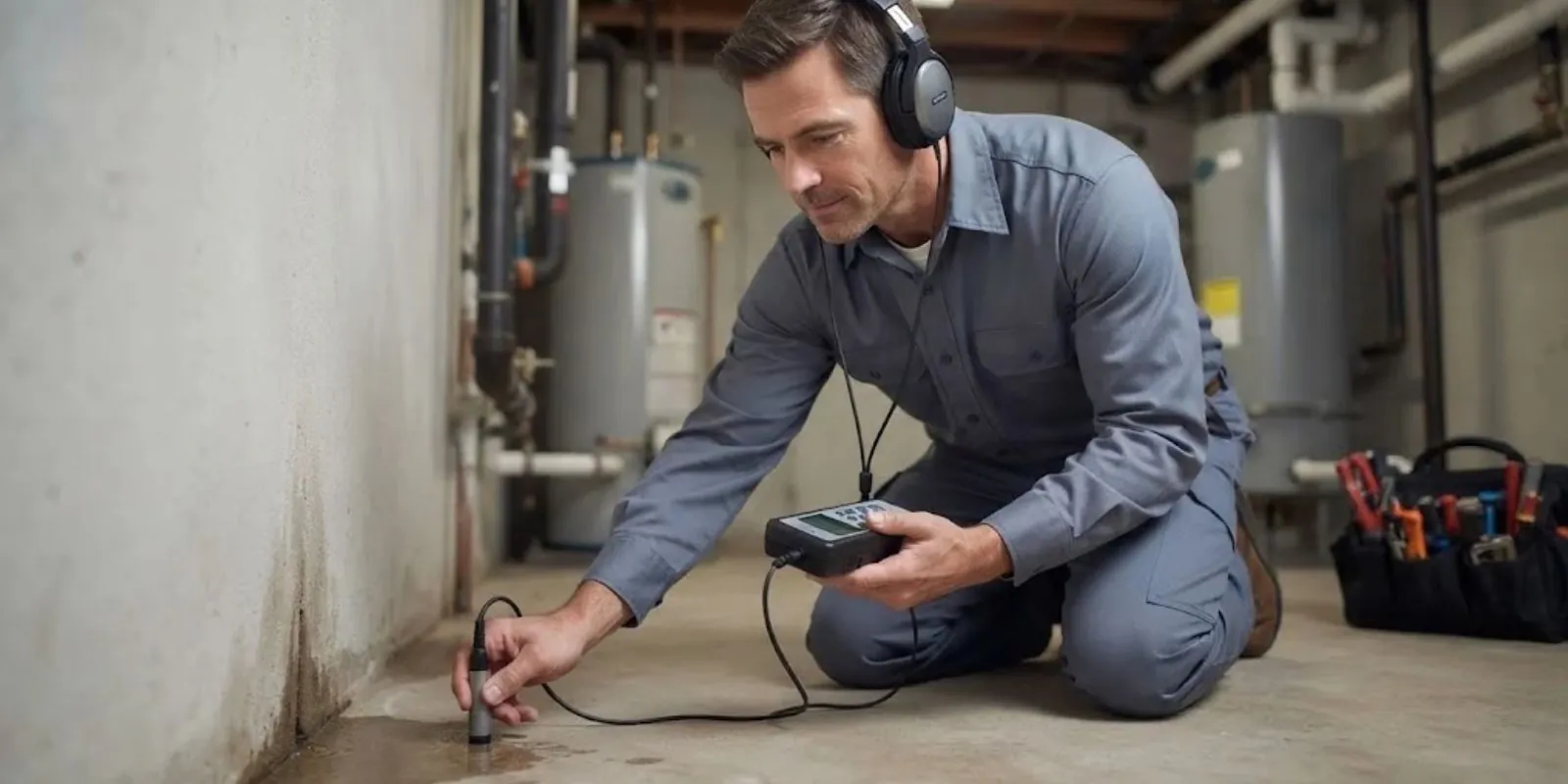
- 3Acoustic listeningGround microphones and contact sensors pick up the sound of water escaping under pressure.
- 4Thermal imagingA thermal camera shows temperature differences from hot or cold water behind a surface.
- 5Confirm and markWe mark the spot so an opening in the wall or floor is small and in the right place.
The high water bill question
A bill that jumps with no change in habits is often a toilet that runs, an irrigation line that stays open or a slow underground leak. The meter test settles whether the water is leaving the plumbing or being used.
LADWP serves most of West Hollywood, and Beverly Hills Water serves certain west side areas. Your bill tells you which utility you have, and the meter belongs to that utility. We never touch the utility side of the meter, and we point you to the right customer service line if the meter itself looks faulty.
Where hidden leaks start
Different systems fail in different places.
| Location | Common cause | Typical clue |
|---|---|---|
| Supply pipe in a wall | Corrosion or a failed joint | Damp wall, low pressure |
| Under a slab | Pipe wear or movement | Warm floor spot, see slab leak repair |
| Shower valve or pan | Worn seal or cracked pan | Stain on the ceiling below |
| Water heater connection | Fitting wear or tank failure | Pooling near the base |
| Service line to the building | Age or ground movement | Wet ground, see water line repair |
What older buildings add to the picture
Many West Hollywood buildings are covered by rent stabilization because their original certificate of occupancy predates July 1, 1979. Plumbing from that era can include galvanized steel and early copper, both of which develop pinhole leaks with age. A single leak in such a system often means other sections are close behind.
We tell you whether the leak looks like an isolated failure or a sign of general pipe wear. If it is the second, the conversation moves toward repiping rather than another patch.
What to do while you wait
These steps limit damage.
- Find and close the shutoffYour unit or building has a main valve. Learn where it is before an emergency.
- Move belongingsLift items off wet floors and away from walls.
- Photograph the damageInsurers ask for photos taken before cleanup.
- Do not open walls yourselfA small hole in the wrong place adds repair cost without finding the leak.
What shapes the cost of leak detection
We quote before work begins.
A single room is quicker than a whole building.
Open ceilings and utility rooms speed the work.
Meter test, acoustic and thermal tools each add diagnostic value.
Fixing the leak is quoted separately from finding it.
Nights and weekends are emergency pricing, stated up front.
Many policies cover sudden water damage but not the cost of finding a slow leak or repairing worn pipe. Read your policy and keep the detection report.
After the leak is found
A leak under the floor leads to slab leak repair, a broken supply line to burst pipe repair and an outdoor leak to water line repair.
We search for hidden leaks in homes and buildings across the Hollywood Hills and the rest of the area.
Suspect a hidden leak? Call and we will start with a meter test.
Call (213) 672-5590Leak Detection questions answered
Yes. Our line is open at night and on weekends. If water is spreading, close your main shutoff and call. We book the earliest appointment available and bring detection tools suited to what you describe.
Close your unit shutoff and watch the meter or your own water use. If the problem stops, it is on your side. If it continues, the source is in the shared system and the manager should be told.
We try to keep openings small and precise. Acoustic and thermal tools narrow the spot, so a single small opening is often enough.
No. Irrigation, new occupants and seasonal use raise bills too. A meter test with all fixtures off tells you whether water is escaping.
Yes. Water can run inside a wall or under a floor for weeks. Mold, swollen wood and damaged finishes are common results.
Yes. We quote the repair after the search, and you decide whether to go ahead.
Sources and standards
Facts and rules on this page come from the public sources below. Check them for the current wording before you rely on a detail.
- California Plumbing Code (Title 24, Part 5), which is based on the Uniform Plumbing Code (UPC) published by IAPMO.
- City of West Hollywood rent stabilization rules, which cover properties with an original certificate of occupancy before July 1, 1979.