
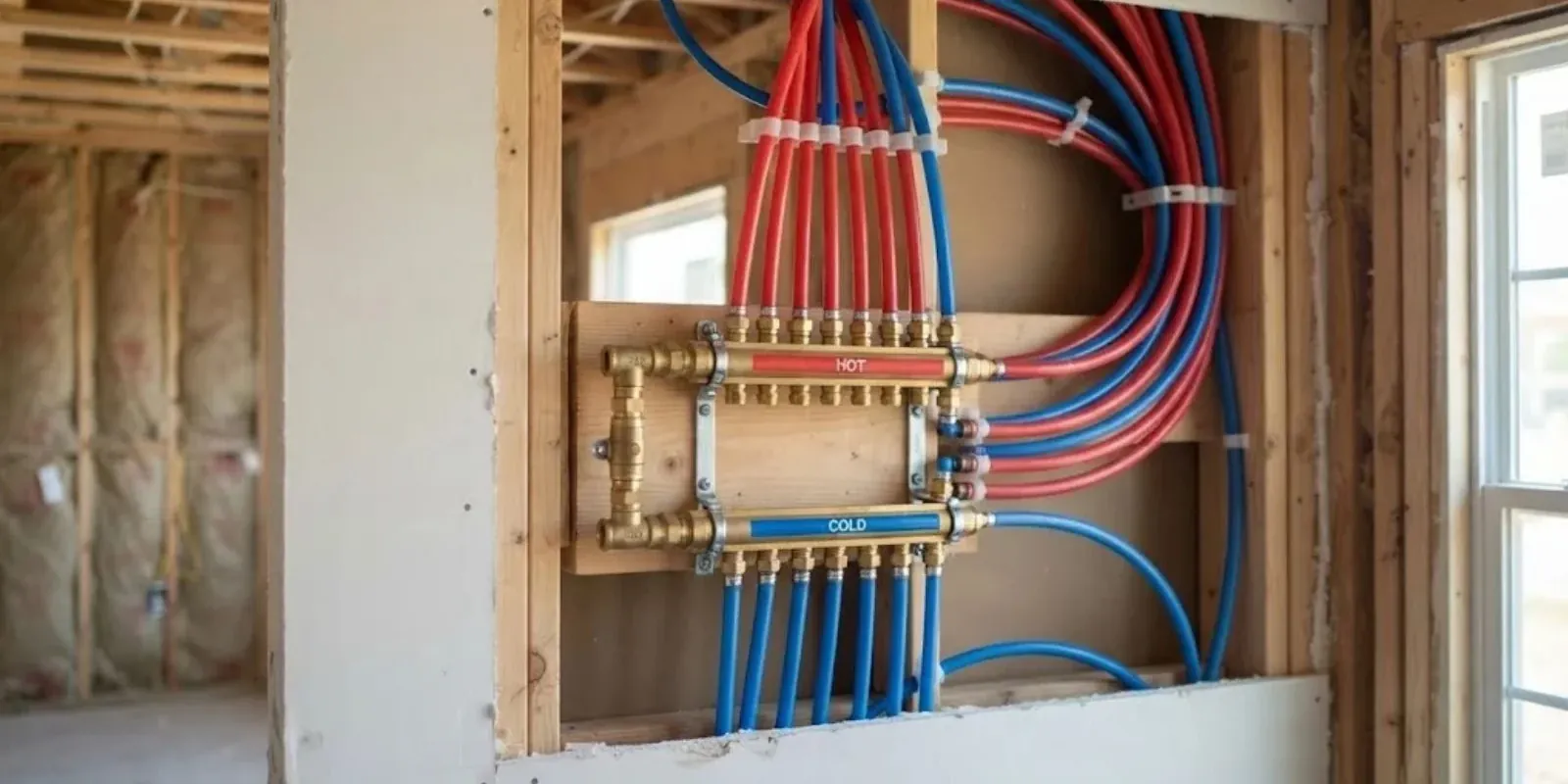
PEX-A, PEX-B and PEX-C
The letters describe how the tube is made, not a quality grade. PEX-A is the most flexible and can be expanded for fittings. PEX-B is stiffer and often less costly, and PEX-C sits between them. All three carry potable water when approved for it.
Look for markings on the tube that show it is rated for potable water and for the temperatures and pressure you need. Do not use tubing that has been left in the sun for long periods, because UV degrades it.
Joining methods compared
The method sets the tools you need.
| Method | How it works | Notes |
|---|---|---|
| Crimp ring | Copper ring compressed over a barbed fitting | Simple tool, fitting reduces flow slightly |
| Clamp ring | Stainless clamp tightened with a cinch tool | Common for DIY |
| Expansion | Tube is expanded and slips over the fitting | Full-flow, needs PEX-A and an expander |
| Push-to-connect | Fitting grips the tube | Fast, costs more, good for repairs |
The installation sequence
The same pattern repeats on every run.
- 1Plan the manifold or trunkDecide whether to use a manifold or a branch layout.
- 2Cut tube squareUse a PEX cutter for a clean edge.
- 3Join and secureMake the connection and strap the tube at the required spacing.
- 4Protect and sleeveUse sleeves where tube passes through framing and protect from sharp edges.
- 5Pressure testTest the system before walls close.
Limits and cautions
PEX should not touch a gas heater flue or run within a clearance of a flue. It should not be exposed to direct sunlight. A heater connection normally uses a metal transition section of copper pipe before PEX begins. Rodents and some chemicals can damage the tubing.
Many jurisdictions require a permit and an inspection for a repipe or new supply lines. Skipping that can cause trouble when you sell or file an insurance claim. See repiping for how a whole-building replacement is scoped.
When to hire a plumber for PEX
A DIY repair is one thing. A system is another.
- Whole-building repipesLayout, permits and inspections need experience.
- Connections to a water heaterMetal transitions and relief valves are code items.
- Multi-unit buildingsShutoffs and tenant notice need coordination.
- Anything that needs a permitThe permit holder carries the responsibility.
Layout choices: manifold or trunk-and-branch
A manifold system runs a separate line from a central point to each fixture. It gives steady pressure at each tap and lets you shut off one fixture without touching the rest. A trunk-and-branch layout uses a main line with branches, which uses less pipe but shares flow between fixtures.
In an apartment, a manifold in a closet is a handy design, since each fixture can be isolated. In a larger house, a hybrid is common. The choice shapes the price, the water wait time at distant fixtures and the ease of later repair.
Tools and supplies for a PEX job
The kit is smaller than for copper.
- PEX cutterA clean square cut is the base of every joint.
- Crimp or cinch tool and go and no-go gaugeThe gauge confirms every ring is correct.
- Support strapsTubing needs support at set spacing.
- Pressure test kitA gauge and a pump to test before walls close.
- Sleeves and nail platesThey protect the tube from framing and screws.
Testing and what a good inspection sees
Before the walls close, the system is filled with water or air and held at pressure for a set time. A gauge that falls means a leak, and every joint is checked. An inspector looks at supports, clearances, transitions to metal and the heater connection.
Failing a test is normal and costs little to fix while walls are open. A leak behind a finished wall costs far more, and it can be hard to find. Keep the inspection record with your property papers, since a buyer or insurer may ask for it later.
Common PEX mistakes and how to avoid them
The most frequent mistakes are kinks, unsupported runs and bad crimps. A kinked tube restricts flow and weakens the wall, and the fix is to cut it out and splice. A long unsupported run sags and rubs, so straps at the required spacing matter.
A crimp ring that is not checked with the gauge may leak weeks later. Mark each checked ring so the inspector and you can see which are done. Never join PEX to a gas line or run it near a flue, and never leave rolls of tubing in the sun.
Finally, label the manifold. A few minutes with a marker saves a future plumber an hour of guessing which line serves which fixture.
Where PEX fits and where it does not
PEX suits residential supply lines, repipes and remodels. It is less suited to exposed outdoor runs, hot spots near flues and places where a hard impact is likely. Copper still makes sense in those spots, and a mix of materials is common.
What shapes the cost of a PEX job
A written scope helps.
More fixtures and floors mean more tube.
Expansion tools and fittings differ in price.
Open walls cut labor.
Required for replacement of water piping.
Wall repair is often a separate trade.
Insurance does not pay for a planned repipe. It may cover damage from a sudden failure of new work.
Permits, pressure and hard water in West Hollywood
The West Hollywood Plumbing Code requires a permit for installation, alteration, repair, replacement or remodel of a plumbing system. Leak repairs on water piping, valves or fixtures are exempt, while replacing that piping needs a permit. Ask the city Building and Safety Division before starting.
The California Plumbing Code calls for a pressure regulator when static pressure is above 80 psi. PEX tolerates scale and pinholes better than copper, which helps in a hard water area like Beverly Hills at roughly 290 mg/L, though PEX does not solve the water heater scale problem. See plumbing installation, the Beverly Hills page and the Hollywood Hills page for related work.
Local questions answered
Yes, when the tube is certified for potable water and installed properly.
Usually through a short metal transition section. The code and the heater maker set the details.
It tolerates freezing better than rigid pipe, though West Hollywood rarely sees hard freezes.
Many makers cite decades of service life. Sunlight, chemicals and bad fittings shorten it.
Sources and standards
Facts and rules on this page come from the public sources below. Check them for the current wording before you rely on a detail.
- California Plumbing Code (Title 24, Part 5), which is based on the Uniform Plumbing Code (UPC) published by IAPMO.
- California Plumbing Code section 608.2 on pressure regulators when static pressure is above 80 psi.
- West Hollywood Plumbing Code section 103.1.1, permits for plumbing installation, alteration, repair, replacement and remodel, and the exemptions for leak repair and clearing stoppages.
- City of Beverly Hills water quality information and the LADWP 2023 water quality report, which list hardness and disinfection by source.
Got a plumbing problem in West Hollywood? Call the line.
Call (213) 672-5590