
Which utility serves you
LADWP serves most of West Hollywood, and Beverly Hills Water serves certain west side areas. Your bill names your utility. Each publishes a water quality report, and the hardness values differ between them and between sources.
Beverly Hills reports about 290 mg/L total hardness on its own page. LADWP lists hardness by source in its annual water quality tables, and the range runs from the mid fifties to over two hundred mg/L. Which source reaches your tap varies, so we recommend a quick test at your faucet before sizing a system.
Hardness levels and what they mean
A common scale used in the industry.
| Hardness (gpg) | Rating | What you may see |
|---|---|---|
| 0 to 3.5 | Soft | Little scale |
| 3.5 to 7 | Moderately hard | Occasional spots |
| 7 to 10.5 | Hard | Scale on fixtures |
| 10.5 and above | Very hard | Heavy scale, appliance wear |
What a softener does
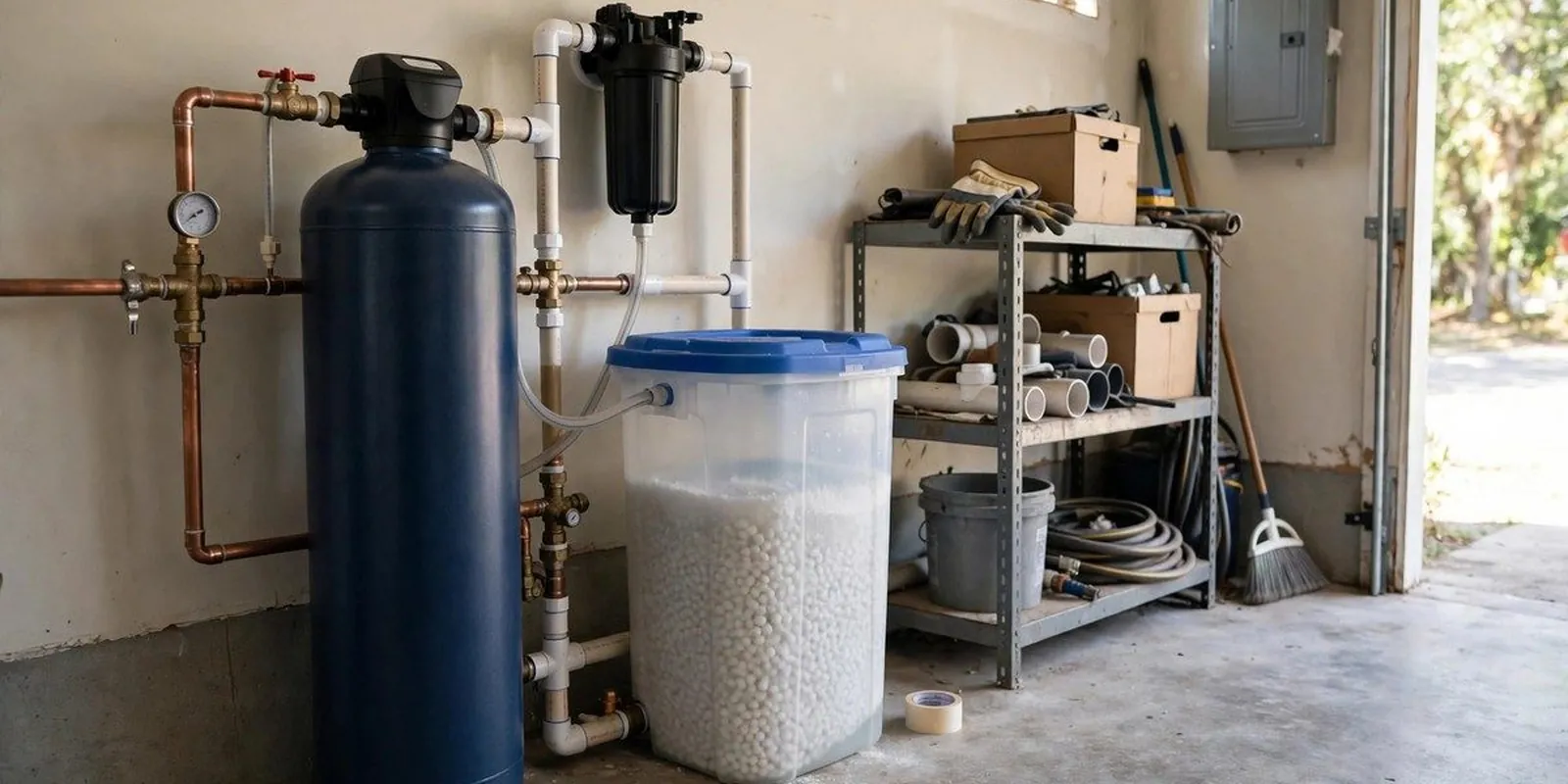
A softener swaps hardness minerals for sodium or potassium in a resin tank. It does not filter chlorine or chloramine, and it does not remove bacteria. It protects pipes, water heaters and fixtures from scale and helps soap lather.
Space is the main limit in West Hollywood buildings. Many condos and apartments have no room for a tank, and some HOAs restrict systems. We check the space and the rules before recommending one.
Filtration and chloramine
Beverly Hills Water uses chloramine for disinfection. Chloramine is harder to remove than chlorine, and a catalytic carbon filter is the usual choice for a whole-building or point-of-use system. A carbon filter does nothing for hardness, so hardness and chloramine are separate decisions.
Under-sink and refrigerator filters handle drinking water. A whole-building filter protects every tap, and it needs more space and maintenance.
Water heaters and scale
Scale reduces the efficiency of a water heater and shortens its life. In a tankless unit, scale can block the heat exchanger and needs periodic flushing, as covered in tankless water heater. In a tank unit, sediment settles at the bottom and can be flushed.
If you are replacing a heater in a hard water area, ask about a softener at the same time. The two jobs share the same connections and shutoffs.
Is a softener right for you?
Ask these questions.
- Is there scale on fixtures and glass?That points to hardness.
- Do you own or have approval to install?Tenants need the owner's consent.
- Is there space for a tank?Condos and apartments often lack it.
- Do you have a water heater or tankless unit worth protecting?Scale shortens its life.
Testing your own water first
A hardness test strip costs little and gives a number in minutes. Fill a clean glass from the cold tap, dip the strip and compare the color to the chart. Test at the kitchen tap and again at a tap far from the heater, since pipe scale can change what you see.
Bring the number to a plumber, along with your utility name and the age of your heater. That is enough to decide whether a softener, a filter or nothing at all makes sense, and it keeps you from buying a system sized for a problem you do not have.
What shapes the cost of a system
We quote after a water test and site visit.
Softener, carbon filter and under-sink units differ.
Based on hardness and household or building demand.
Plumbing, drain and power connections.
Salt, filters and servicing over time.
Some work needs a permit.
Insurance does not cover softeners. They are an upgrade, and the choice is a matter of cost and benefit.
Pairing treatment with other work
A softener protects a new water heater and a tankless unit, and it slows scale in a repiped system.
We advise on treatment for Beverly Hills customers, where the city reports about 290 mg/L, and across the area.
Hard water at your tap? Call and we will test and advise.
Call (213) 672-5590Water Softener and Filtration questions answered
It depends on the utility and the source. Beverly Hills reports about 290 mg/L. LADWP values vary by source. A test at your tap is the best answer.
No. A catalytic carbon filter does that.
Only with owner and building approval, and if there is space.
It helps a lot, because the spots are mineral deposits.
Typically not noticeably, though some people notice a slight change. Drinking water can come from a separate tap or filter.
Sources and standards
Facts and rules on this page come from the public sources below. Check them for the current wording before you rely on a detail.
- California Plumbing Code (Title 24, Part 5), which is based on the Uniform Plumbing Code (UPC) published by IAPMO.
- City of Beverly Hills water quality information and the LADWP 2023 water quality report, which list hardness and disinfection by source.