
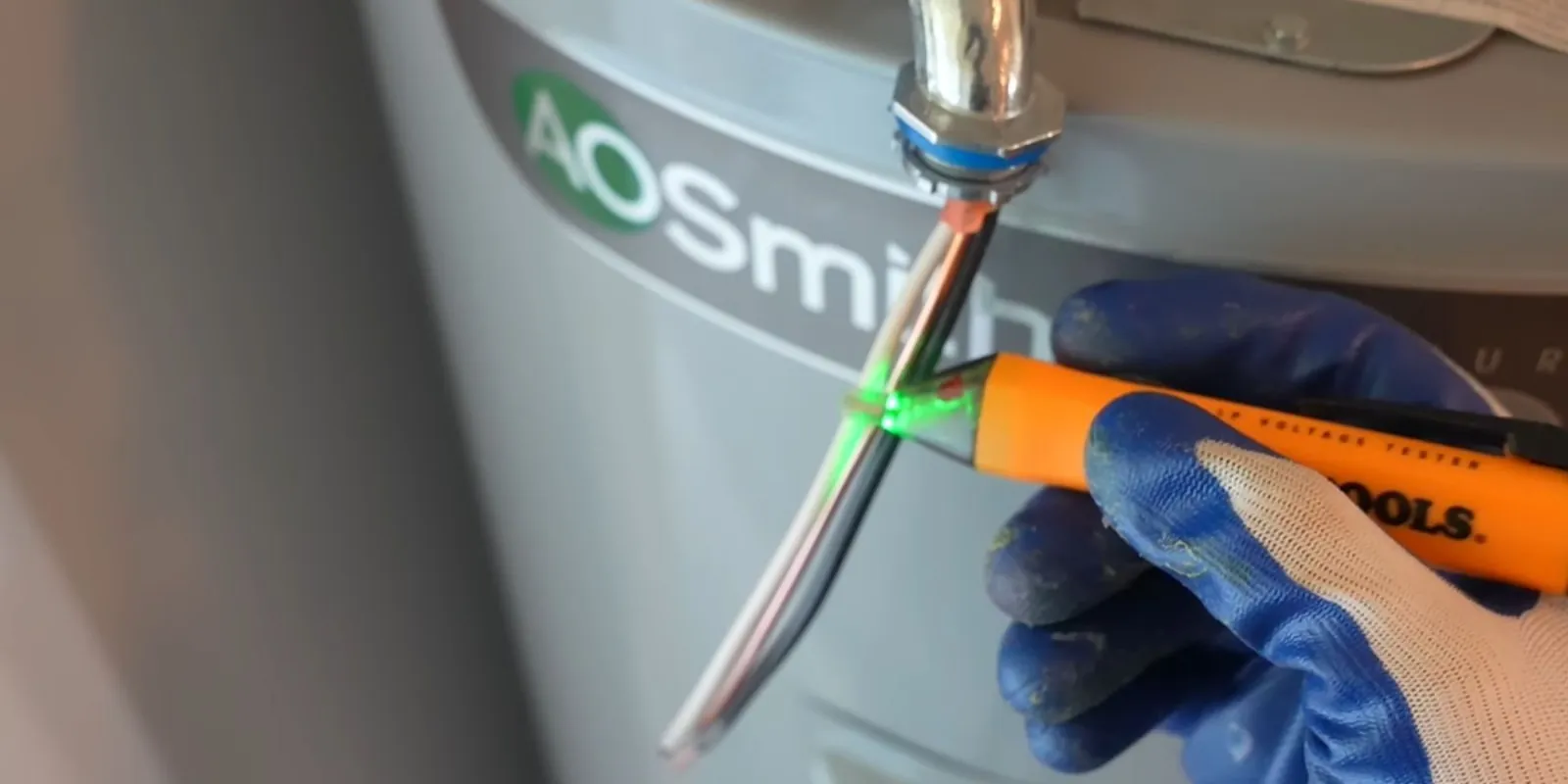
What the valve does
The valve sits on the side or top of a tank heater and has a discharge pipe that runs down toward the floor. If the water gets too hot or the pressure passes the valve rating, it opens and releases water. That keeps the tank from over-pressurizing.
A valve is a mechanical part and it wears. Mineral deposits can stick it open or closed. A valve that never opens when needed is the dangerous failure, and you only find out by testing.
How to test the valve
Do this once a year. Keep your hand and face clear of the discharge pipe.
- 1Confirm a discharge pipe is attachedIt should end a few inches above the floor or drain.
- 2Place a bucket under the pipeWater may be hot.
- 3Lift the test lever brieflyWater should flow and stop when you release the lever.
- 4Watch for a drip afterwardA valve that keeps dripping needs replacement.
Drip causes and the right response
Not every drip is the valve.
| Pattern | Likely cause | Response |
|---|---|---|
| Constant drip from the pipe | Worn valve or debris | Replace the valve |
| Drips only when heating | Thermal expansion pressure | Add an expansion tank |
| Spurts when hot water is used | Pressure spikes | Test pressure, check regulator |
| Wet around the valve base | Loose threads | Reseal or replace |
| Steam or very hot water | Overheating tank | Shut off and call us now |
Expansion tanks and high pressure
When water heats, it expands. In a closed system with a check valve or regulator on the supply, that water has nowhere to go, and pressure rises until the relief valve opens. An expansion tank gives the water somewhere to go. If your valve drips only after a heating cycle, ask about one.
The California Plumbing Code calls for a regulator when static pressure is above 80 psi. High incoming pressure makes expansion problems worse. We test both before replacing the valve, because a new valve in a high-pressure system just starts dripping again.
Replacement: what a plumber does
We shut off the heater and the water supply, drain a little from the tank and unscrew the old valve. A new valve with the right pressure and temperature rating goes on with proper thread sealant. The discharge pipe is checked for material, slope and an open end. Then the tank is refilled, the air is purged and the valve is tested.
The discharge pipe matters. It should be a material approved for hot water, with no valve or cap on the end. Many older installations have a pipe that is too small, has a trap in it or points up. Correcting it is part of a proper job. For a heater that is also leaking at the tank, see water heater repair.
Never do these
A relief valve is a safety device.
- Never cap or plug the dischargeThe valve cannot protect the tank if it is blocked.
- Never replace with a lower-rated valveThe rating must match the tank.
- Never ignore steam from the pipeShut off the heater and call a plumber.
- Never stand in front of the dischargeWater may be hot enough to scald.
Signs the valve itself is the problem
A valve that weeps a few drops after every heating cycle is wearing out. A valve with a white crust around the outlet has scale inside. A valve that has never been lifted in ten years may be stuck in the closed position, which is the more dangerous case, because the tank has no relief if pressure rises.
If the lever feels frozen, do not force it. A broken lever leaves you with a valve that cannot be tested at all. Call a plumber and have the valve replaced, which is a modest job compared with the risk of a heater that cannot vent pressure.
What a good discharge pipe looks like
The pipe should run straight down from the valve to a point a few inches above the floor or a drain, with no cap, plug or valve on the end. It should be a material approved for hot water, the same size as the valve outlet and free of traps and sharp bends.
A pipe that dead-ends in a wall or a bucket hides a drip until the floor rots. Where there is no floor drain, many installers run the pipe to the outside or to a safe termination. Check that the end is visible, since a hidden drip is the one you never fix.
What shapes the cost of a relief valve replacement
The price is stated before we start.
Parts needed for a compliant setup.
Larger tanks take longer.
Added when pressure is the cause.
An old tank may not be worth the work, see water heater replacement.
Emergency pricing is stated first.
Insurance rarely covers a worn valve. It may cover water damage from a sudden tank failure.
Local rules that touch your heater
California Health and Safety Code section 19211 requires water heaters up to 120 gallons to be braced, anchored or strapped, including new and replacement units. A relief valve discharge pipe and a seismic strap are often checked together in an installation. If your heater sits in a closet or garage in an older building, look for the straps while you test the valve.
Water hardness changes how fast a valve sticks. Beverly Hills Water reports about 290 mg/L, roughly 17 grains per gallon, and LADWP reports a range by source. Scale is the usual reason an old valve will not reseat. Our Beverly Hills page and Hollywood page describe what we see in those areas.
Local questions answered
Once a year is a common recommendation. Check the manufacturer manual for your model.
It can be a sign of pressure or a worn valve. A drip is not an emergency, and steam or very hot water is.
It is a plumbing and safety part. A mistake in the discharge pipe or the valve rating is a hazard. We recommend a licensed plumber.
Many tankless units have a pressure relief arrangement too. Check the manual and ask us during a service visit.
Sources and standards
Facts and rules on this page come from the public sources below. Check them for the current wording before you rely on a detail.
- California Plumbing Code (Title 24, Part 5), which is based on the Uniform Plumbing Code (UPC) published by IAPMO.
- California Plumbing Code section 608.2 on pressure regulators when static pressure is above 80 psi.
- California Health and Safety Code section 19211, bracing, anchoring or strapping of water heaters.
- City of Beverly Hills water quality information and the LADWP 2023 water quality report, which list hardness and disinfection by source.
Got a plumbing problem in West Hollywood? Call the line.
Call (213) 672-5590