
Check these before you call
For a gas heater, check that the pilot is lit and the gas valve is open. For an electric heater, check the breaker and press the reset button on the thermostat cover if your model has one. A tripped breaker that trips again is a fault that needs a plumber.
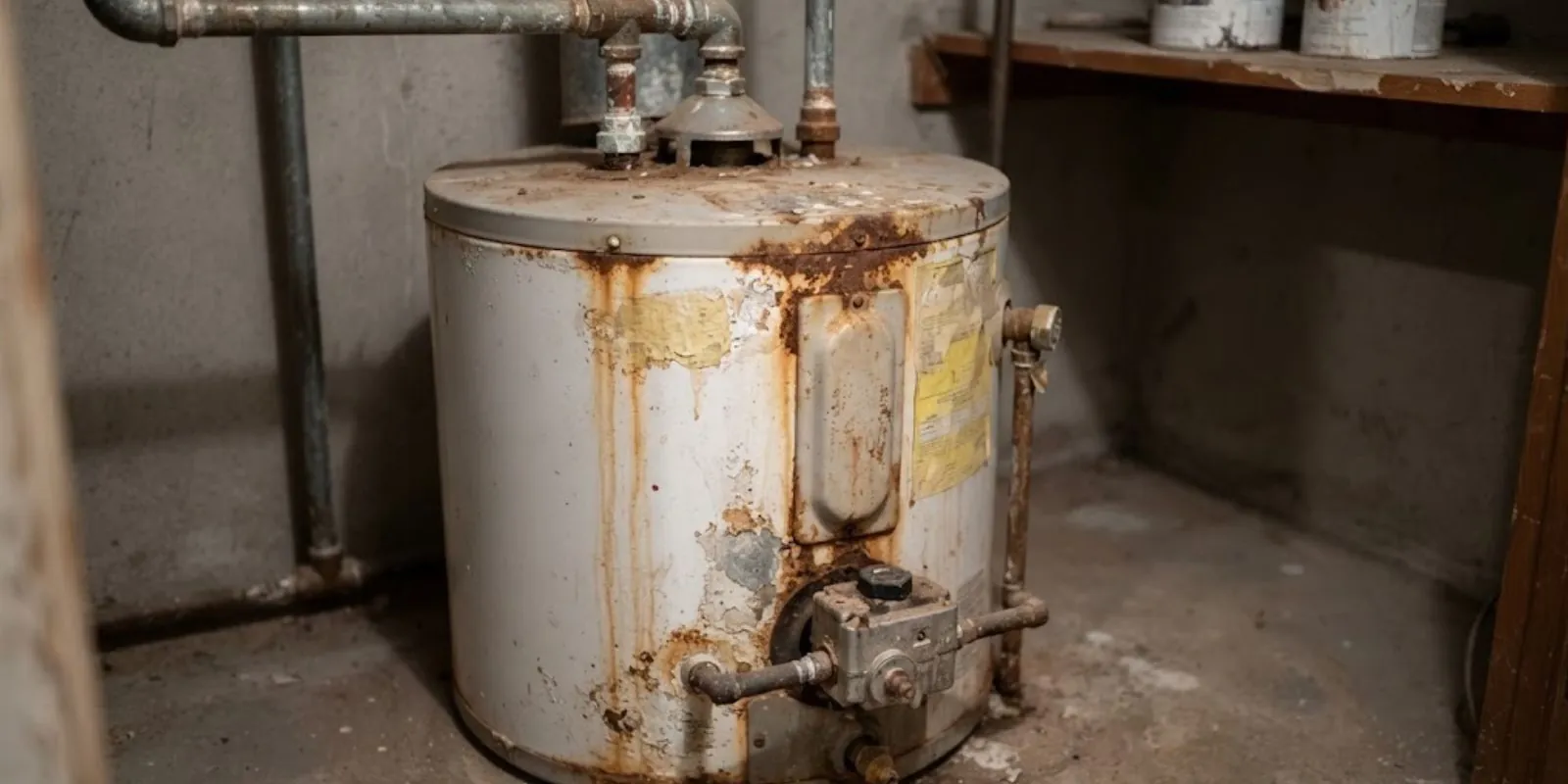
Look for water around the tank. A wet floor means a leak, and a leaking tank is a different job from a bad thermostat. Shut off the cold supply to the heater if water is running.
Faults and the usual outcome
Parts on the truck decide whether it is a one-visit fix.
| Fault | Usual cause | Same-day fix? |
|---|---|---|
| No hot water, electric | Failed element or thermostat | Usually yes |
| No hot water, gas | Thermocouple, pilot or gas valve | Often yes |
| Lukewarm water | Sediment, failing element or dip tube | Often yes |
| Popping or rumbling | Sediment in tank | Flush, often yes |
| Leaks from the tank body | Tank corrosion | No, replacement needed |
| Leak at a fitting or valve | Worn connection | Usually yes |
When repair beats replacement
A heater that is under about ten years old, with a sound tank, is a good repair candidate. A failed element or thermostat costs far less than a new unit. A leak from the tank itself cannot be repaired, since the steel has failed.
Age, repair history and the cost of the repair guide the decision. We tell you honestly when the repair is not worth the money, and the water heater replacement page explains what a replacement involves.
What happens in the visit
A good visit follows a fixed order.
- 1Safety checkGas, venting, relief valve and electrical connections.
- 2DiagnosisTest the element, thermostat, valve or burner as the fault suggests.
- 3Repair quoteYou see the price and the options before work starts.
- 4Repair and testParts are replaced and the unit is run through a heating cycle.
What to tell the dispatcher
It helps the crew bring the right parts.
- Gas or electricIt decides the parts.
- Tank or tanklessThe faults differ.
- Age and brandCheck the label on the tank.
- What you seeLeaks, noises, codes or tripped breakers.
Why some heaters cannot be fixed the same day
A heater with a failed tank, a model whose parts are no longer made or a gas valve that needs to be ordered cannot be repaired in one visit. A plumber who tells you so at the first visit is saving you money, not avoiding work.
When same-day repair is not possible, ask for a temporary answer. A building can sometimes bypass a failed heater or run a temporary unit while a new one is ordered. Tell the dispatcher how many people depend on the hot water, since a single-person unit and a twelve-unit building call for different plans.
What to have ready
These details speed up the visit.
- The label on the tankIt shows the model, the serial number and the capacity.
- Access to the heaterClear the closet or the path to it.
- Water and power or gas shutoffsKnow where they are before the plumber arrives.
- A contact for building accessIn a multi-unit building, the manager may hold the key.
Gas, electric and tankless: what differs in a repair
Gas heaters add the burner, the pilot, the thermocouple and the vent to the list of parts that fail. Electric heaters have two elements and two thermostats, and one failed element halves the hot water. A tankless unit has sensors, a fan and a heat exchanger, and many faults show as codes.
The type changes the parts the crew brings and the time the repair takes. A thermocouple takes minutes. A tankless circuit board may need ordering. Giving the dispatcher the make, the model and any code you see gets the right parts on the truck the first time.
After the repair: what to watch for
Check the heater the next morning for leaks, odd sounds and the temperature at the tap. A repair that held through the night usually holds. Write down the date and what was replaced, since that record helps if the same fault returns.
If the heater is more than ten years old, ask the plumber how much life is left. A repaired old unit can still fail soon, and planning a replacement on your schedule beats an emergency at midnight.
What shapes the cost of a same-day repair
We quote before work.
An element or thermostat is much less than a gas valve.
Gas, electric and tankless differ.
Tight closets slow the work.
Straps or a discharge pipe may need correcting.
Emergency pricing is stated up front.
Insurance does not cover a worn part. A sudden tank failure that floods a floor may be covered, so call your insurer.
Straps, closets and building rules in West Hollywood
California Health and Safety Code section 19211 calls for water heaters of up to 120 gallons to be braced, anchored or strapped, for new and replacement units. If your heater sits in an older apartment closet and has no straps, tell your owner. We check for them when we service a unit.
West Hollywood has many multi-unit buildings, and some use a shared heater for the whole building. A shared heater failure is a building issue, and the manager decides on repair. Southern California Gas Company serves the gas side, so a gas smell goes to the utility first, and then to us for the heater. See water heater repair for the full service, and our Hollywood and Hollywood Hills pages for nearby areas.
Local questions answered
We book the earliest appointment available. Call and the dispatcher gives you a window.
Leave the area, do not use switches, and call the gas utility first. We can service the heater after it is safe.
Yes. A failing thermocouple or draft problem is the usual cause, and it is a quick fix.
Hot water is a basic habitability item. Report the problem in writing and keep a copy.
Sources and standards
Facts and rules on this page come from the public sources below. Check them for the current wording before you rely on a detail.
- California Plumbing Code (Title 24, Part 5), which is based on the Uniform Plumbing Code (UPC) published by IAPMO.
- California Health and Safety Code section 19211, bracing, anchoring or strapping of water heaters.
Got a plumbing problem in West Hollywood? Call the line.
Call (213) 672-5590