
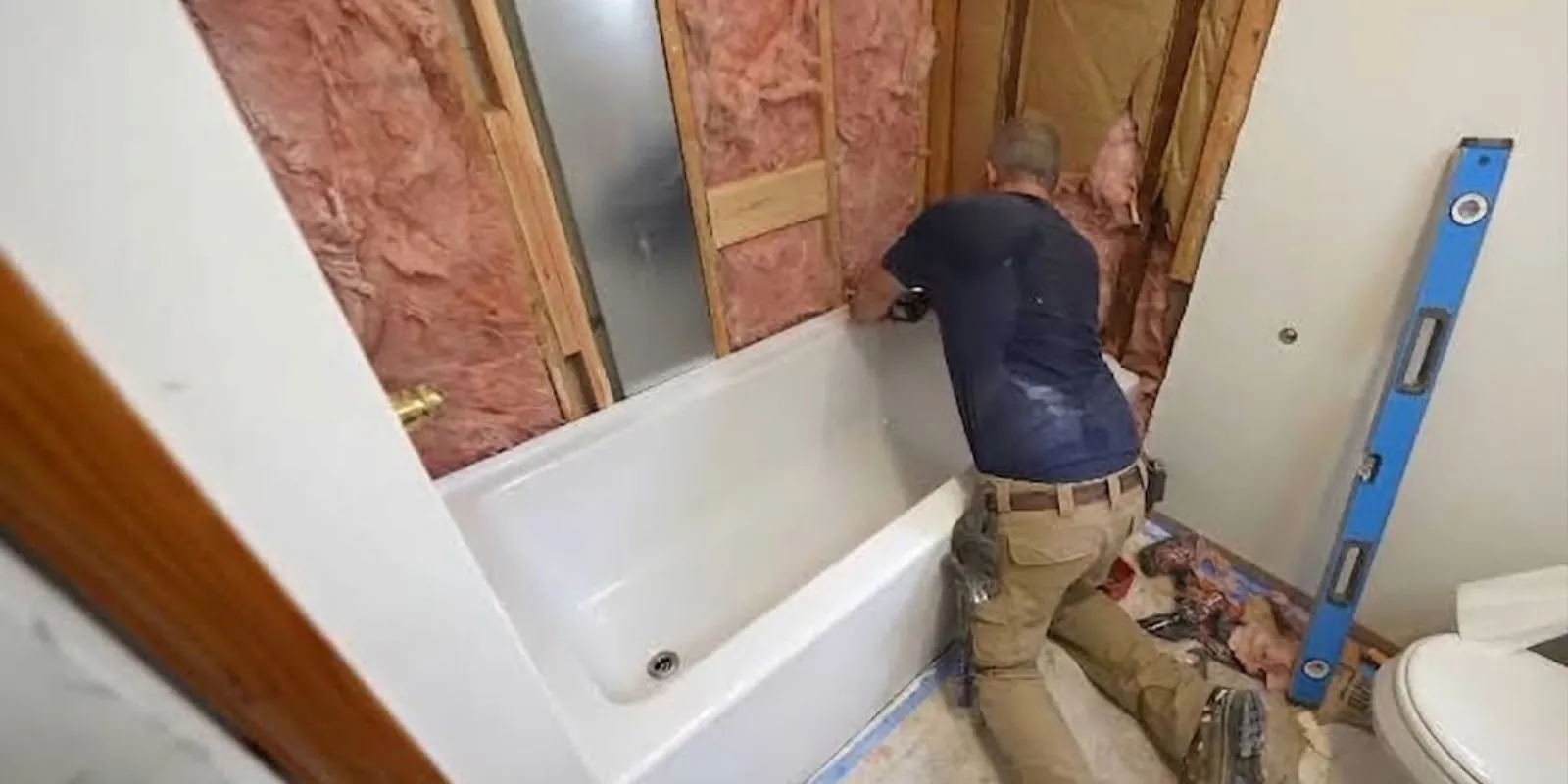
Start with the tub and the sheet
Every tub has a spec sheet showing the drain position and the rough-in dimensions. A standard alcove tub sits against three walls and drains at one end. A freestanding tub may drain through the floor.
Set the tub in place before connecting anything, check that it is level and that it rests solidly on its base. A tub that flexes under load leaks at the drain.
The four parts of a tub installation
Each has a job and a common failure.
| Part | Job | Common mistake |
|---|---|---|
| Drain and trap | Carries water away and holds a seal against sewer gas | Wrong slope or a missing trap |
| Overflow | Prevents overfilling | Loose gasket leaks into the wall |
| Valve and spout | Mixes and delivers hot and cold water | Reversed supplies or poor soldering |
| Vent | Lets air in so water drains freely | No vent or a vent too far away |
Installation steps
The order below avoids opening a finished wall.
- 1Rough in the drain and trapSet the trap, the drain tailpiece and a slope of about a quarter inch per foot.
- 2Set the valveMount the valve at the right depth for the trim and test the supply lines.
- 3Install the tubSeat it on mortar or foam as the maker specifies.
- 4Connect drain and overflowUse the gaskets provided and test with water before closing access.
- 5Finish the wall and trimTile or surround goes on after the pressure test.
Access panels and why they matter
A tub drain often sits in a framed wall or under a floor. If the drain leaks after the wall is finished, the only way in is by cutting. A small access panel on the back side of the wall or in the floor below makes future repair possible.
In a multi-story building, that access may be through a closet in the unit below. Plan it with the owner and the neighbor before closing the walls. A hidden failure of a tub drain is a common source of ceiling stains and a classic leak detection call.
Mistakes that cause leaks later
Most are easy to prevent.
- Skipping the water testFill the tub and check the drain before closing the wall.
- Overtightening plastic partsIt cracks threads and leaks slowly.
- Wrong thread sealantUse what the maker specifies on drains.
- No access to the trapFuture repairs become demolition.
Valve choices and why they matter
A pressure-balancing valve holds the water temperature steady when someone flushes a toilet or runs a tap elsewhere. A thermostatic valve lets you set a precise temperature. A basic two-handle valve mixes by hand and costs the least.
Many codes call for a pressure-balancing or thermostatic valve in new showers and tubs, to reduce scald risk. Check what applies to your project before buying. The valve body sits inside the wall, so changing it later means opening the wall.
Questions to settle before the walls close
Each costs little to answer now.
- Which side is the drain on?Left and right tubs are not interchangeable.
- Where does the valve sit?Height and depth must suit the trim and the tile.
- Is there blocking for grab bars?Solid wood in the wall costs little today.
- Is the tub on a solid base?A flexing tub loosens the drain.
Water heater and hot water delay
A tub is a big hot water user. A heater that is too small leaves the last person with a lukewarm bath. Check the heater size when you plan a soaking tub, and think about the distance between the heater and the tub, since a long pipe wastes water while it warms.
A recirculation loop or a point-of-use heater shortens the wait. Those are design decisions for rough-in, not for the last day of the remodel.
Testing the tub before anything is covered
Plug the drain and fill the tub to the overflow. Let it sit for an hour, then release the water and watch every joint on the drain and overflow. Any drip means a gasket or a joint needs attention before the wall closes.
Run the supply lines under pressure as well. A slow gauge drop or a damp spot at a joint shows a leak long before a stain would. Take photos of the open wall with the pipes in place, so a future plumber knows where everything sits.
Finish with a hot and cold check at the spout and the shower arm. Reversed supplies are easy to fix with the wall open and expensive to fix after tile.
What shapes the cost of tub plumbing
A written scope keeps the price clear.
Alcove, freestanding and soaking tubs differ in rough-in.
Moving a drain is more work than a swap.
Pressure-balancing valves cost more than basic ones.
Alteration of drain and vent piping needs one.
Panels and wall repair are part of the job.
Insurance does not cover a planned install. Sudden failure of new work during the warranty may be covered.
Older West Hollywood buildings and tub drains
Many West Hollywood buildings were built before July 1, 1979, which puts them under rent stabilization and often means cast iron drains and galvanized or early copper supply. A tub replacement in an older building may meet a corroded drain stub or a valve that no longer matches modern trim. Plan for that surprise in the budget.
The West Hollywood Plumbing Code requires a permit for alteration of drain, waste and vent piping, and ordinary stoppage clearing is exempt. If you plan to move a tub drain, ask the city first. Our plumbing installation page lists related jobs, and the Hollywood and Beverly Hills pages cover the nearby buildings we serve.
Local questions answered
Yes. Every fixture drain needs a vent connection, though it may share a vent with a nearby fixture within the code limits.
About a quarter inch per foot is the typical minimum.
A simple swap can be done in a day. A relocated drain or valve takes longer.
Yes. It prevents overfilling and is part of the standard tub assembly.
Sources and standards
Facts and rules on this page come from the public sources below. Check them for the current wording before you rely on a detail.
- California Plumbing Code (Title 24, Part 5), which is based on the Uniform Plumbing Code (UPC) published by IAPMO.
- West Hollywood Plumbing Code section 103.1.1, permits for plumbing installation, alteration, repair, replacement and remodel, and the exemptions for leak repair and clearing stoppages.
- City of West Hollywood rent stabilization rules, which cover properties with an original certificate of occupancy before July 1, 1979.
Got a plumbing problem in West Hollywood? Call the line.
Call (213) 672-5590